Wednesday, February 24, 2010

Growing in Character, Skill and Knowledge

In May of 2008 the Staff Ministry Committee finished its work in developing a credentilaing process for church staff ministry leaders who are not ordained. Last week a Credentialing Committee met to interview the first four candidates for the process!

The Credentialing Committee is made up of two people who are experienced ministry staff (after the initial process these will be ministry leaders who have been credentialed), along with one member each of the Staff Ministry Committee, the Office of Pastor-Church Relations, and the faculty or staff of Calvin Theological Seminary or another college or university associated with the CRCNA. The Committee also includes one pastor from the classis of the candidate, though not from the candidate’s congregation.

My interview was at 3:30 pm—an hour I began to regret when at 3:00 afternoon drowsiness hit and my eyelids started to feel heavy! But the interview was friendly and encouraging, with questions about my faith statement, strengths and weaknesses, and why I desire to be credentialed. Over half of the bi-national committee joined us by phone from around Canada and the United States, reminding me of the scope of the credentialing process. Once credentialed in educational ministry, my credentials will hold true for every classis in the CRCNA.

After the interview I received a call from Jeanne Kallemeyn, staff ministry specialist, and member of the Credentialing Committee. She welcomed me into the process and emailed me information on the next steps—choosing a Learning Partner (LP), assessing my current level of skills, knowledge, and character for ministry, and developing an Individualized Learning Plan (ILP) for growth. The credentialing process includes a summary of core requirements in each of these areas that will guide me as I work with a Learning Partner to design an ILP.

This is an exciting process—one that could bless individuals, churches, and the whole denomination as educational ministries are strengthened!

If you’re interested in becoming credentialed in church education contact Jeanne Kallemeyn at jkallemeyn@crcna.org or 616-726-1152 for more information.

written by Jolanda Howe, CRC Educator

Monday, February 22, 2010

Debriefing

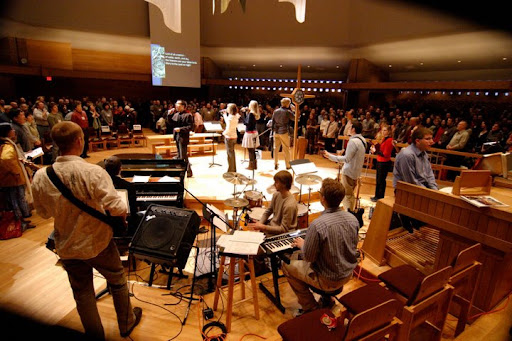
Six people from our church attended Worship Symposium at Calvin College this January. The group included our pastor, my husband and me. On Friday afternoon I sat next to Amy, one of our church members, before a vesper worship started and we began sharing. She commented that we should all get together and share what we had seen and heard. I mentioned this to our pastor who was all for the idea -- “Any time volunteers are willing to get together and talk about worship, it is a good thing.” So after several emails back and forth we identified the one date in the next two weeks that worked.

As my husband and I talked about how to organize the meeting we thought about writing down all the ideas on a white board but it seemed too much like a meeting where we were trying to get something done instead of a time to share. We talked about making a topic list ahead of time and hitting the topics we were interested in: Prayer, Visual art, Music, Worship, Psalms but again that was maybe too organized for what we were trying to accomplish. At last I decided to just run through the schedule, day by day and see what struck the participant each day. That may not have been the best choice. We began by reviewing Thursday, followed by Friday and by that point we were off on tangents about the things we learned at symposium. I don’t think we ever talked about Saturday. But we did have a great discussion anyway.

So what did we learn? The biggest thing I learned is that gathering to debrief is a great thing – and maybe not having the debrief super-organized helped in the long run. Our discussion quickly focused on a topic I never expected: drama in worship and making better power point presentations. As a group we gathered around these ideas and generated the next steps for our church. We are checking into materials to do a drama at our church. We are talking to the tech committee to see if they are enthused about improving our visuals. We also are now accountable to each other to move this forward. We as a group are accountable for this – not me alone.

The next time I do this, though, I would ask each person before the meeting to think about one thing that struck them during Symposium and begin the meeting with those highlights. Then after giving everyone a chance to speak we could then open the discussion to the whole group. The hour and half was very well spent. Best of all, the ideas we discussed are now owned by the whole group, not by just one person. We are all excited about a couple of new ideas and how we can incorporate that into the life of the church.

Wednesday, February 10, 2010

Baptism/ Faith Milestone Idea


At Symposium my husband Bob and I presented at a session about Faith Milestones. We have recently written the book Celebrating the Milestones of Faith published by Faith Alive.

The people who came to our session were great. One participant said that when her daughter was baptized, she had received a large picture frame with a mat and an opening for a 5 x 7 picture (I have one in my basement that we bought at Bed Bath and Beyond for my daughter’s wedding. It is called a signature frame.) The vow that the congregation makes during the service was written on the mat. Every person at the baptism signed the mat as they left the service. The frame and mat were given to her and her husband who later added a picture of the child from that day. What a wonderful reminder of the promise made at baptism and the promises made by the people of God who surrounded her.

Friday, February 05, 2010

Sing With the World

Last week I attended the Calvin Worship Symposium held in Grand Rapids. At the Conference I met Alison Adam from England. She led a group of high school students and teachers in learning some new songs as well as two children’s school groups in a worship service and a sectional. She introduced her new songs book and CD Sing with the World: Global songs for Children. Written with John Bell, the songs are delightfully and easy to sing. I especially like the song “Don’t be Afraid”. The lyrics are:

Don’t be afraid. My love is stronger

My love is stronger than your fear.

Don’t be afraid. My love is stronger

And I have promised, promised to be always near.

This is a great song to sing with “When I am Afraid”. It is also useful in worship with it's wonderful promise of assurance.

Alison also recommended the CD "Down To Earth" by fischy music. It can be purchased two ways: a CD with just the audio or and audio CD and a CD -ROM that includes teaching notes, lyric sheets, music and videos showing signs and actions. The video part is very simple -- one or two people talking and singing unaccompanied. The songs are also great with titles like" God Knows Everything", "Written on the Palm of God's Hand" and "Part of your Plan".

I bought both of these resources and have already found songs that I could use with the kids at our church.

Saturday, September 19, 2009

Church Safety

My position at church includes being the child safety point person. Each year we have a child safety training meeting. At these meetings I remind the volunteers of where the fire extinguishers, band-aids, forms and more information is located. Much of this information could be communicated in the church newsletter. So I started monthly “Church Safety” column. Here is my first installment:

Church Safety Update

Where are the Fire Extinguishers located?

Our church has five fire extinguishers placed in the buildings. They are located:

• On the counter in the kitchen
• By the door in the library
• In the basement
• In the hallway behind the choir loft
• In the Cadet Building


What other methods of communicating Church Safety do you use?

Tuesday, September 08, 2009

"She Knows Me"

Last week I heard Chap Clark speak. He has written several books and I am presently reading Hurt. He is a lively, entertaining speaker. Most of Clark’s work is with adolescents. He spent a lot of time explaining that adolescence begins at about 12 years old and goes to 22 years old today. He said that one way to reach our kids today is to have five people who really know each child. As I thought about this I realized that if teens need five people to really know them, we should begin when they are children.

In my own church I can think of a couple of examples. There is a family with children the same age as mine. We teamed up for carpooling for the kids’ sport teams and church activities. It seemed like all the games our kids were involved in were at the same time so I would take the boys to Little League and she would take the girls to softball or visa versa. About 4 years ago, their high school aged daughter brought a boyfriend to church. She introduced me to her friend and said, “This is Mrs. Keeley. She knows me.”

My son is applying for a youth director position at another church. He was asked about how the church should minister to young people. He talked about how he used to play baseball and one church member, Mr. Mulder would talk to him about baseball often – in fact, he would come to a couple of our sons’ games. He knows my son.

There are two things I’m thinking about here. I need to help the members of my church by coming up with more opportunities for them to make these kinds of connections with kids. My job in children’s ministries is to foster more of these kinds of connections. I also personally need to make sure that I know a couple of kids. It’s important. The church is place where we should know each other, a place where we belong.

What are other ways that we as a church can get to know our children? What ways have other church members come to know children in your ministry?

Thursday, September 03, 2009

God's Diverse Creation

On a recent trip to Kohl’s I purchased the $5.00 hardcover books they have available to use at my church. This fall three books written by Steve Jenkins are offered -- Actual Size, Biggest, Strongest, Fastest, and What Do You Do With A Tail Like This?

These are great books to use with children to talk about the wonderful diverse creation that God has created. The colorful pictures draw you into the book. I particularly liked the picture of an elephant’s foot—actual size--in the book Actual Size. I purchased copies of all three books for the teachers to use for those times when they have a few extra minutes to fill. What a fun way to look at the wonders God made!

Thursday, August 27, 2009

Symposuim on Worship -- For Educators Too!

Every year when I attend Calvin’s Symposium on Worship, I’m never sure what I will learn. This yearly conference is held at Calvin College at the end of January. I started to go because my husband was presenting and I could stay with him in the Prince Conference Center on Calvin’s campus, but every year I learn more and enjoy the conference more. Even though the conference is about worship, there are sessions about children and resources that can be used in adult education.

The workshops are varied. This year I heard Sister Joyce Ann Zimmerman talk about baptism practices during the 1st to the 4th Century. Howard VanderWell discussed profession of faith. Craig Satterlee spoke about the stories of the church (and at that session I received a free book!). Barb Newman presented a session about autism, and Kristen Verhulst introduced and recommended many children’s book about worship. I also enjoyed the Jazz Vespers service led by Ed Dolman and Rae Whitney. I felt like I was resting in the Lord’s palm. It was a great way to complete a busy day.

One of the other benefits of attending Symposium is the free resources. This year five resources were given to participants:

  • Contemporary Songs for Worship (Faith Alive Christian Resources, CICW, 2008).
  • Worship Words: Discipling Language for Faithful Ministry, by Debra Rienstra and Ron Rienstra (Baker, 2008)
  • Touching the Altar: The Old Testament for Christian Worship, edited by Carol M. Bechtel (Eerdmans, 2007)
  • Images of Faith CD, compiled by Sandra Bowden (CIVA, 2008). This CD is full of images that can be used in power point presentations.
  • The Father & His Two Sons: The Art of Forgiveness, images from the Larry & Mary Gerbens Collection (Eyekons, 2008)

We used the Contemporary Songs book immediately because it featured songs the children could learn in Sunday school and could also be used in the congregational worship service.

No discussion of Symposium is complete without talking about the worship services. There are six worship services over the three days. The services are inspirational and well organized. The group of people who gather at symposium can sing! It is a joy to be part of the singing. I go there looking for ways to include children, teens, and more lay adults in worship, and I always find new things to try in my church. These may be from the readings, music, or art ideas presented. Perhaps the best part of worship at Symposium is that I don’t have any extra responsibilities like I do at my own church. I can direct all of my attention on worshiping God!

Worship Symposium is not a conference about curriculum or programs. It is a conference that focuses on worship and how all the programs and people in a congregation can be involved and nurtured by worship. When I go, I listen to the theology, stories, and music of the church, and that enriches me and nourishes my ministry.

Check out the resources on the Calvin Institute of Worship website.

How would you describe the relationship between worship and education? How do the two intersect in your congregation?

Tuesday, August 25, 2009

Resource Review

The God-Hungry Imagination: the Art of Storytelling for Postmodern Youth Ministry by Sarah Arthur (Upper Room Books, 2007)

In The God-Hungry Imagination, Sarah Arthur combines her experience as a youth leader along with her love of literature and makes a compelling case for the importance of story not only in the lives of the church’s young people, but in all of us. In this fascinating and enjoyable book, Arthur reminds us that the Bible is a great story (rather than just a set of smaller stories) and that making sure that we understand the story and are willing to share it is one of the most important things we can do for our kids. The book includes both conceptual ideas for why story is important in ministry and also some concrete suggestions for how to carry out the idea.

--Robert Keeley, Professor of Education, Calvin College

Have you noticed this emphasis on story and God’s one big story turning up a lot lately in books and resources?

Saturday, August 22, 2009

Marking Faith Milestones


Each Sunday, just before the sermon, my pastor calls forward the children to pray for them before they are dismissed to go downstairs for children’s worship. Last week, something special happened, the congregation celebrated a milestone in Taylor’s life.

As the kids gathered up front, I went forward with them, and the pastor handed me a microphone. I told the congregation that Taylor was now at the age that she would be staying upstairs to listen to the pastor’s sermons. I gave her a very cool notebook, with a pen attached, and a note inside, and told her that this was a milestone in her life—she was now ready to listen and learn along with the older children, teens, and adults, as the pastor shares a message from the Bible!

I also let her know that we were glad that she heard God’s stories downstairs, and that we were eager to see her enjoy the sermons upstairs. “It reminds me,” I said, “of the story of Jesus staying behind in the city because he was eager to sit at the feet of the teachers in the temple as they shared God’s Word.” After saying a few more words about that we prayed as a congregation for Taylor—that she would continue to be eager to hear God’s Word and grow in faith.

The whole celebration took only about two minutes, but they were an important two minutes! Not only for Taylor, but for the younger children who were standing next to Taylor, knowing that soon they would be sitting with Taylor, listening to the pastor’s sermons upstairs. And for all of Coit church, the celebration challenged us to think about whether we are eager to hear God’s Word each week. Are we excited that kids in early elementary school are sitting with us in the pew, being shaped by God? That God is at work among us?

Marking faith milestones is a meaningful practice in the life of a congregation—it draws us near to God with grateful hearts and nearer to one another as well. It helps us see that we share in this journey of faith, and that our God is always calling us in new directions along that journey!

—Jolanda Howe, Coit Community CRC in Grand Rapids, Michigan

What faith milestones do you mark in your congregation? Which have been most meaningful to you?

Tuesday, August 18, 2009

A Renewed Sense of Mission

The Belhar embodies what I love most about our Reformed sense of mission—that through Christ, God is reclaiming and restoring all of creation, and that we are part of that process! We are active agents in the world—working for God’s glory and spreading God’s good news so that the world, and the people in it, might be transformed!

That good news includes these Biblical and theological themes, identified by Synod 1996:
Creation
1. The world as God created it is rich and God-glorifying in its diversity.

2. The created world with all its diversity has its unity in the one God, who created it through Jesus Christ.

3. The unity and diversity of the human race and of created reality reflect the unity and diversity of the triune God (namely, his oneness and threeness).

Fall
4. A fundamental effect of sin is the breakdown of the community.

New Creation
5. The uniting of all things in Jesus Christ is at the heart of God’s eternal plan for the ages.

6. Reconciliation with God and reconciliation with one another are inseparable in God’s saving work.

7. Already in the old covenant the scope of God’s mission is racially and ethnically inclusive.

8. In Pentecost, the outpouring of the Holy Spirit upon the church, God gives new power to the church, power to break down walls of separation and create a community that transcends divisions of race, ethnicity, and culture.

9. The church is God’s strategic vehicle for embodying, proclaiming, and promoting the unity and diversity of the new creation.

10. God calls Christians to find their deepest identity in union with and in the service of Jesus Christ.

11. Obedience in matters of racial reconciliation calls us, individually and corporately, to continually repent, to strive for justice, and to battle the powers of evil.

12. Christians live and work in the hope that one day the reconciliation of all things will be fully realized.


—From the Acts of Synod 1996, pp. 512-13, posted on the CRC Belhar site, www.crcna.org/belhar, on the History page.
A New Appreciation for Confessions
A confession happens when the church speaks—when there is something so important that it requires a voice. The original letter accompanying the Belhar included these words: “This confession is not aimed at specific people or groups of people or a church or churches. We proclaim it against a false doctrine, against an ideological distortion which threatens the gospel itself in our church and our country.” (From statement number three of the original 1986 accompanying letter.)

The Belgic Confession, the Cannons of Dort, and the Heidelberg Catechism were written a LONG time ago (between 1561 and 1619). That doesn’t make them any less valuable, but it makes the events leading up to their writing a little less familiar in our minds. The Belhar comes to us with a freshness and urgency that challenges us to revisit the confessions with new eyes, to ask questions like,
  • Who writes confessions, or decides when one should be written?
  • What did these statements of faith mean to the original writers and audience, and what do they mean to us now?
  • What do we value in confessions; what do we look to them for?
  • How has God used the confessions to shape his people over time?
  • What issues is the church struggling with today that the confessions speak to? What issues weren’t anticipated by the authors?
The Belhar brings the past into the present, reminding us that confessions are not simply documents that sit on a shelf and show up in church school—they are evidence of God’s work in the church and in the world. They challenge us to think deeply about our faith so that we might live in a way that reflects God’s goodness and grace.

Visit www.crcna.org/belhar for articles and resources, and consider the RCA Belhar study, Unity, Reconciliation, and Justice, available through Faith Alive.

-- Jolanda Howe, Coit Community CRC in Grand Rapids, MI

What is the buzz in your congregation? What might the Belhar mean for your church?

Wednesday, August 12, 2009

Hugs and Kisses

In June Gretchen Wolff Pritchard presented at the Children’s Spirituality Conference. Her thoughts about story were very interesting. For children she suggests that we shouldn’t get bogged down with details such as learning all the ten plagues. Tell them the ten plagues happened and then move on. The details, she says, get in the way of children seeing the big picture. She also mentioned how in our visual culture children need a visual vocabulary of the faith.

So I read her book Offering the Gospel to Children. This book was written in 1992 but here is a short except about the church and children taking communion. I think it is an interesting view.

“In our family lives, we express love, forgiveness and acceptance by hugging and kissing. Hugs and kisses are the sacrament of family love. Every member of our culture knows and understands that touching a baby’s cheek with our lips and making a strange little smacking noise signifies our love and care for the baby, and our delight in him. But the baby, at birth, does not know this. He learns, quickly enough, by experience. And we start to teach him to do it too: “Kiss Mommy.” “Give Daddy a big hug.” Kissing and hugging quickly become, for the baby as well, sacramental actions – signs of love and pleasure.

Imagine if, until your child was six, you never kissed her, but only let her watch older people kissing each other. Then when she had learned to red and write (and, incidentally, had already passed the age where her imagination was most eager to grasp non-verbal experience and make it a part of her deepest self), suppose you sat her down with a special curriculum entitled “Kisses and Hugs: Signs of Love.” She would color picture of people hugging and kissing and read exemplary stories about families and answer questions about why we choose this way to express our love. Finally, on a special day, when you were sure she understood enough about hugging and kissing to e truly “read,” you would hug and kiss her for the very first time. She would wear a new party dress, and Grandma would come to lunch and bring a present, and she would feel so proud and so special.

Or would she?“


From Offering the Gospel to Children by Gretchen Wolff Pritchard, Cowley Publications, 1992. p. 160-161

Monday, August 03, 2009

Celebrating Milestones

As a Director of Children’s Ministry, I am always looking for ways for the children to know how a Christian acts. We use 7th and 8th graders as helpers in Children’s Worship, for example, to encourage them to model how a middle school child behaves for the younger children. But we often don’t encourage the adults to talk about their faith. If we don’t do this, children and teens won’t be able to see how these Christians model how God has worked in their lives. We need to share the stories of faith and the stories of God’s faithfulness to his people.

On Thursday evening I was very excited to receive a copy of the new b
ook, Celebrating the Milestones of Faith, written by my husband Bob and me. Milestones has been on my mind for the past three or four years. A milestones program is a wonderful way to remind us that God is faithful. We need to take time to recognize and celebrate what God is doing in our lives and in the lives of those around us.

Yesterday we celebrated my daughters eighteenth birthday. It was a time of cake and gifts. What we forgot to do was to talk about how God had been faithful in her life and in all our lives over the last eighteen year. And we wrote the book! It’s easy to miss these opportunities without some sort of structure to remind us to do it. I guess that’s why God told the Israelites to build a monument near the Jordan River so that when you walked by kids would ask what happened and we would tell the stories.

We need to more intentional about sharing how God is working in our lives and remind ourselves of his faithfulness at church and at home. Faith Milestones can help us do that. Our new book can give you ideas about how to do it in your church.

Tuesday, February 10, 2009

While the adults are in small groups…

We have been using the small group format for some of our evening services. The High school teens and adults are studying Living in Community for five weeks. We first gather for 18 minutes in the sanctuary for singing, prayer, and a short devotional lead by the pastor. Then we break into small groups.

For the children we have been using Kid Connection. I have chosen lessons that fit with the theme of the studies that the adults are using. Kid Connection is large group/ small group format so the middle school kids help with the large group presentations and with the younger children during the small group time. Two adults lead the children each session. The adults have had plenty of material to use and enjoyed working with the kids and working together as a team for one lesson. It has been a good fit for our church.

For these 5 weeks the curriculum for the children is:
Session 1: Foundations
  • “Red Rope Rescue,” Kid Connection Year 1 Quarter 2 Unit 5 Session 3
  • Focus: Rahab helped the spies because she trusted God. God made her part of his family.
Session 2: Worship – We’ll focus on Foundations from Session 1
  • “I’m With You,” Kid Connection Year 1 Quarter 2 Unit 6 Session 1
  • Focus: God lead Ruth to join God’s people.
Session 3: Fellowship
  • “Lazarus, Come Out!” Kid Connection Year 2 Quarter 2 Unit 5 Session 4
  • Focus: By making Lazarus alive again, Jesus showed that nothing can ever keep us from his loving care.
  • Emphasize how Jesus cried with the people when he heard that Lazarus had died. He also rejoiced when Lazarus was raised. We also cry and rejoice together.
Session 4: Challenges – Forgiveness
  • “Zacchaeus, Come on Down!” Kid Connection Year 2 Quarter 2 Unit 5 Session 2
  • Focus: Jesus can change sinful people into friends and followers.
Session 5: Witness – Creation Care
  • “You’re In Charge!” Kid Connection Year 1 Quarter 1 Unit 1 Session 3
  • Focus: God let’s us be in charge of the whole world and all the creatures in it.

Wednesday, February 04, 2009

I Wonder What Else He Heard

My husband Bob and I have been writing Christmas dramas for a number of years. We wrote because we couldn’t find a Christmas program for kids that kids could enjoy presenting, that adults would appreciate and that had an overriding principal. In our latest play, two Hebrew people are talking about the new coffee shop in Israel the year Jesus was born. In a discussion about the special language used in coffee shops, one person complains about how you can’t just say “I’d like it fast” you had to say “I’d like it ‘Expresso’.”

Sunday a mother from our church told me about a visit she made to the coffee shop with her four year old son. After getting the coffee, the four year old asked his mother if she had to get it ‘Expresso’. He even used quotey fingers like the kid in the play did. This line was exactly as it was in our Christmas drama. I guess he was listening.

My first thought was that of all the good stuff we put in the play, why did this child remember only the ‘Expresso’ line? My husband’s response to the story was different. He figured if the child heard that part, imagine what else he heard! I guess that is part of the mystery and joy of working with children.

Monday, February 02, 2009

Children's Books about Worship


The Calvin Symposium on Worship was held at the end of January. Beside thoughtful worship services, there were many great workshops. At one workshop Kristen Verhulst shared several children’s books about worship. Children’s books offer another avenue to teaching our children the language the worship. Books can help kids revel in the presence of our great God and help kids and adult articulate our faith.

Kristen is always updating her list of books and has posted it on the web! Check it out!

Sunday, January 25, 2009

Check out Gina's blog

Check out Gina Dick's Blog. Gina worked at Sunshine Church in Grand Rapids in church education as well as leadership. Now Gina is a full time student at Calvin Theological Seminary.

Wednesday, November 19, 2008

Art, Theology and Children


Ron Rienstra wrote a blog post about a display of children's art work he recently saw while visiting another church. Read more here.


Monday, November 17, 2008

Christmas Gifts for children

What do you give to the children at church at Christmas?
Here are a few ideas from children’s ministry directors in the Grand Rapids, MI area network:

• Last year we gave our kids a Christmas ornament that would remind them of the program. I found some reasonably priced ornaments on-line at Oriental Trading.

• I have been giving ornaments for the past 5 years. I order from CTAinc.com which has nice ornaments for $1- pewter ones for $3. I also order from orientaltrading.com. This gives the children a collection of ornaments and they can remember their growing up years in church.

• Creative Communications for the Parish has wonderful advent calendars—a picture with 25 windows to open. They are cheap and the families love them. You have a choice of several designs and sizes.

• We gave kids Christmas ornament kits to assemble at home, made from brightly colored old Christmas cards. There are directions here.

Saturday, November 15, 2008

Faith Formation Committee

The Faith Formation Committee has a new web site. Check out it out: www.crcna/faithformation